contact@arkeotopia.org


Translation by H. Brand and V. Cattane
The archaeology of emptiness explained
René Char’s idea of moving from “what is here” to “what happened here” captures a central challenge in archaeology [1]. On the ground “the past” is almost never found as it was. Instead, we find traces, gaps, emptiness… and sometimes it is this absence which becomes the most telling clue.
What is the archaeology of emptiness?
The term archaeology of emptiness (or of hiatus) is used when the archaeologist interprets what is no longer visible with the help of other information, such as stratigraphy, micro traces, writing, comparisons, laboratory analysis.
The key insight: the negative brings the positive to light. In other words, we can understand an object, a practice, or a material which has disappeared by studying the trace it left.
1. When written text reveals tools and practices
- tools which have not been preserved (reclaimed metal, decomposed organic material),
- technical practices (weaving, cutting, mining, cooking, rituals),
- objects which are now only fragments.
In this case, the lack of materials is not a failure: written text becomes an indirect proof which completes the picture.
A good example of this is the inscriptions left between the 18th and 19th century by the Inspection générale des carrières (General Inspectorate of Quarries) at former stone quarries, such as Capuchins’ Quarries under Cochin Hospital.
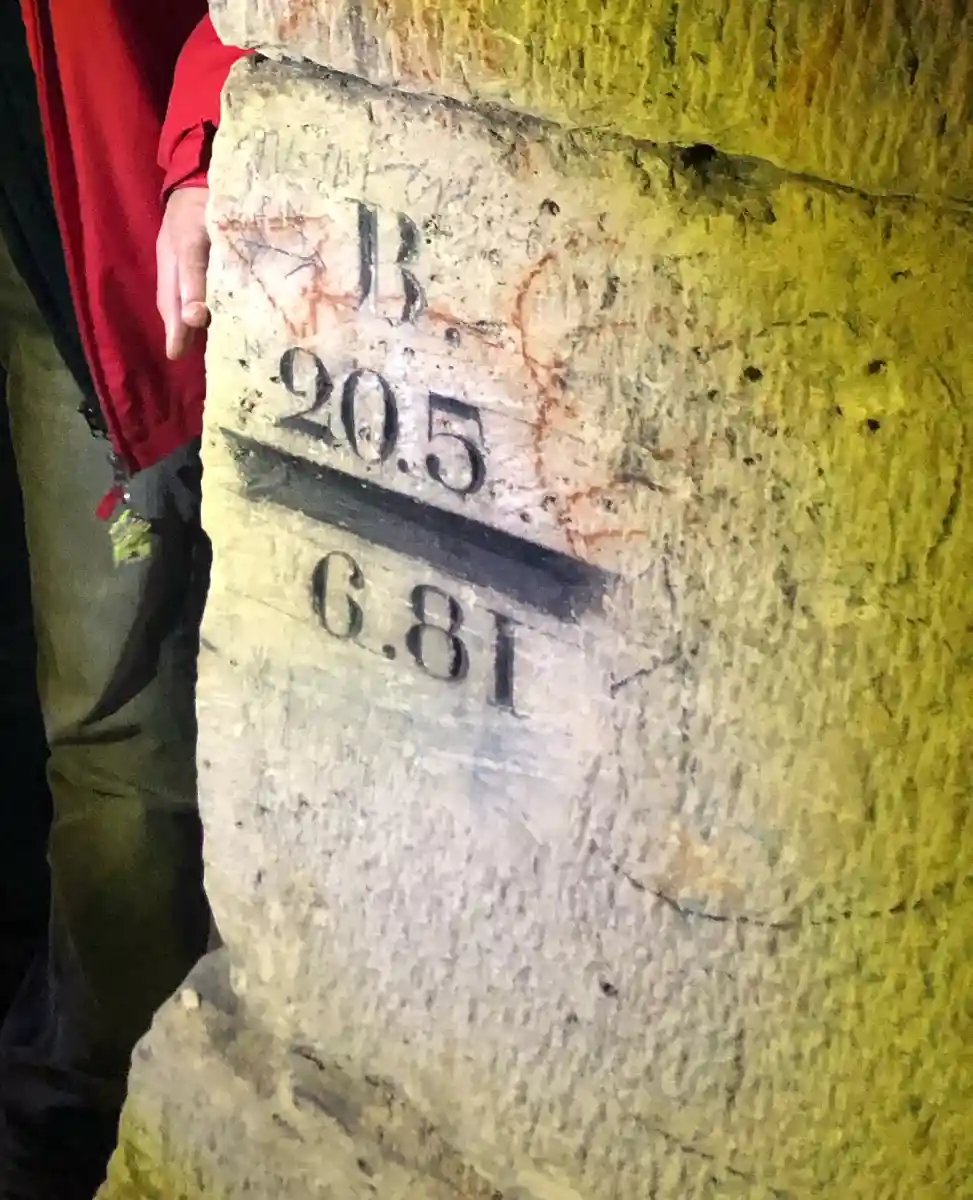
The photograph of the inscriptions shows a letter which indicates the chronology of the markings. The number under the bar represents the number of meters above the water level of Paris at the low-water mark at Tournelle Bridge. The number above the bar shows the number of meters to ground level.
For an archaeologist, the most important thing is that, taken all together, these inscriptions reveal, for the Capuchins’s Quarry, the existence of tools and topographical practices from the 19th century which were not found on site.
2. The imprint – negative space which “speaks”
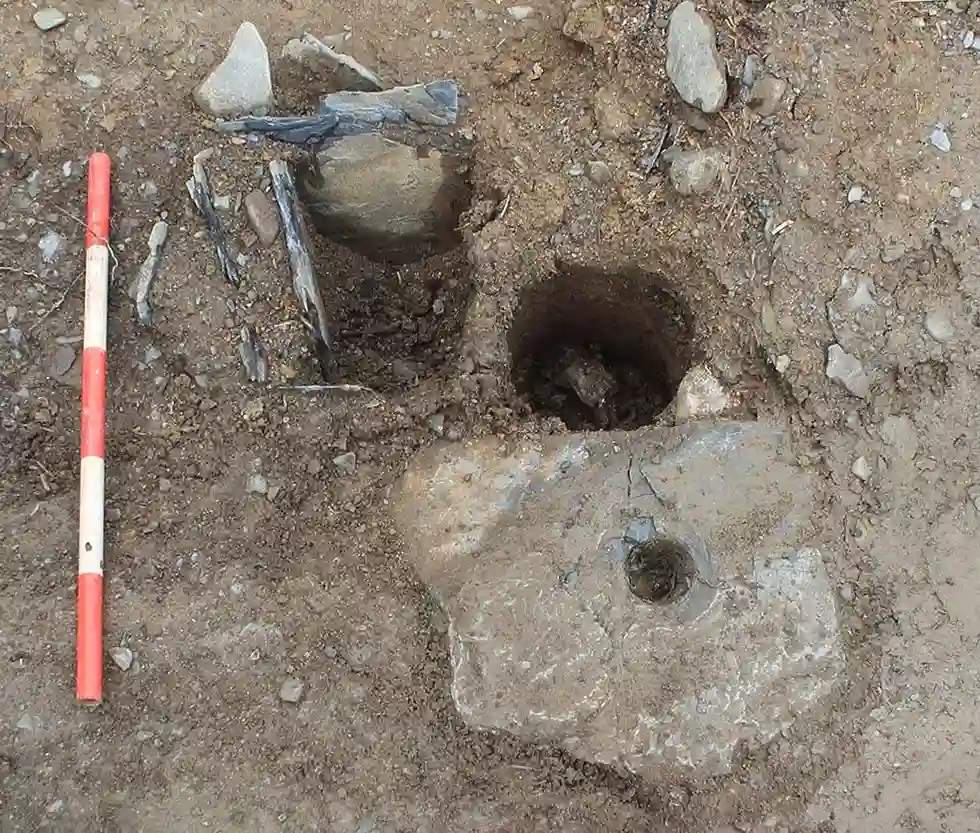
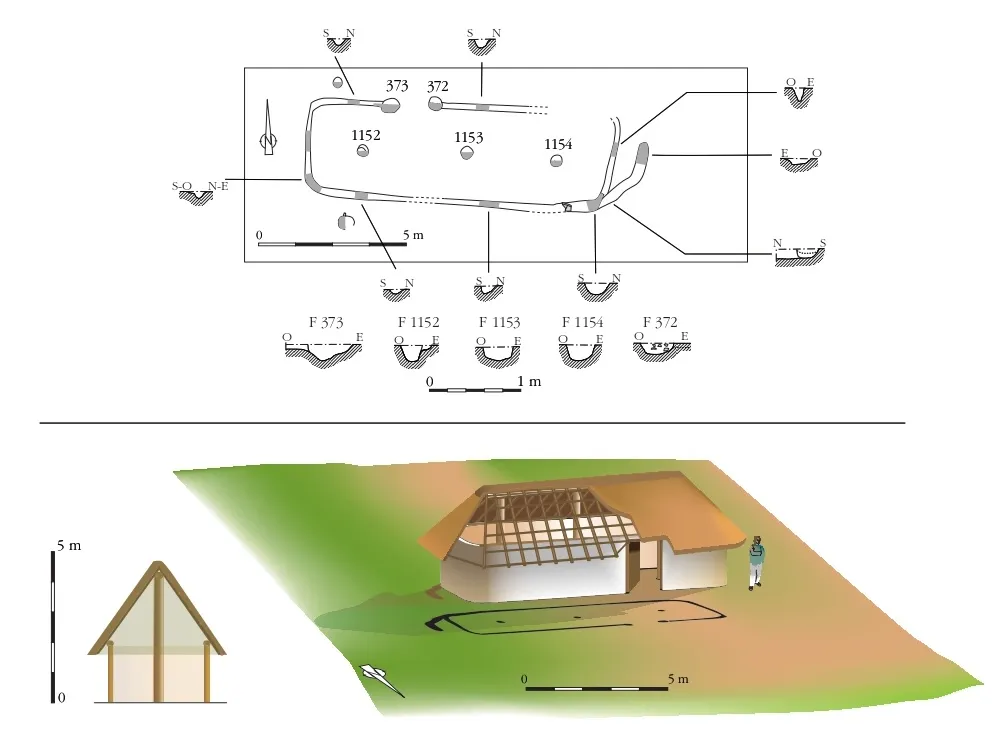
One of the most well-known examples is that of the post hole. Since it is made of wood, the post decomposes with time, is burnt, or moved… Effectively, it disappears. However, depending on the type of terrain, it can be identified by:
- a darker mark,
- a different material filled-in,
- sometimes stone wedges surrounding it.
All of these clues point to the hole it left.
- of a basket weaving in fired ceramic, such as on the Neolithic vase n°83099 from the National Archaeological Museum in France or,
- of a wooden frame in a fragment of burnt wattle and daub, as on fragments no19 from the Bronze Age from room 3 of the same museum or,
- of all other negative spaces which reveal the presence of a positive.
Volumetric analysis of a fill can also lead to the reconstruction of a structure, such as a floor, as demonstrated by Jean-Claude Margueron [2] in his study on earthen architecture in Mari (Syria).
The result: we can reconstruct a building plan, a fence, or a structure even when the wood has disappeared despite the principle of differential preservation [3].
3. The wall effect: how to make missing material appear
When a material has been removed (slabs, bricks, blocks, wood), it might leave:
- an imprint,
- a sharp break,
- a distinct outline in the sediment.
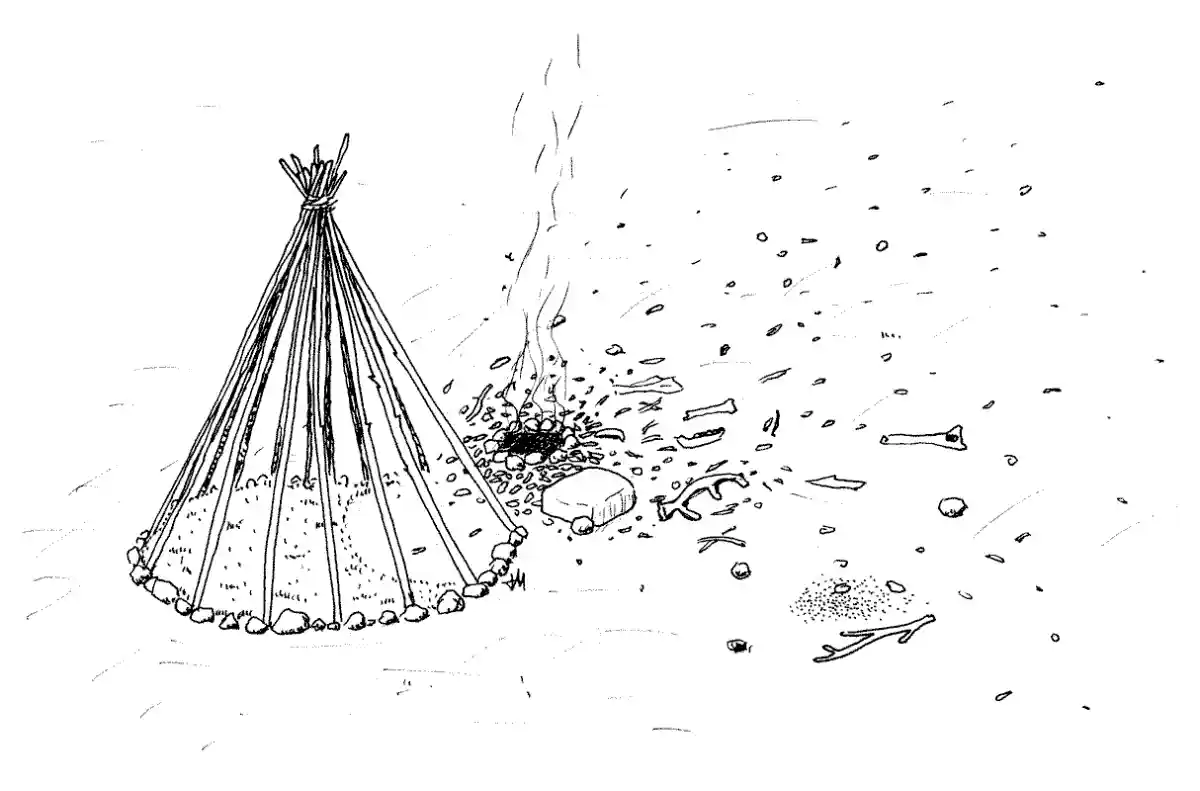
The wall effect is the alignments and absences which correspond to the presence of an obstacle that has disappeared, such as: a covering, a casing, a sleeping area, an architectural element, or even a repair.
4. Reading the emptiness: what anomalies reveal on archaeological digs
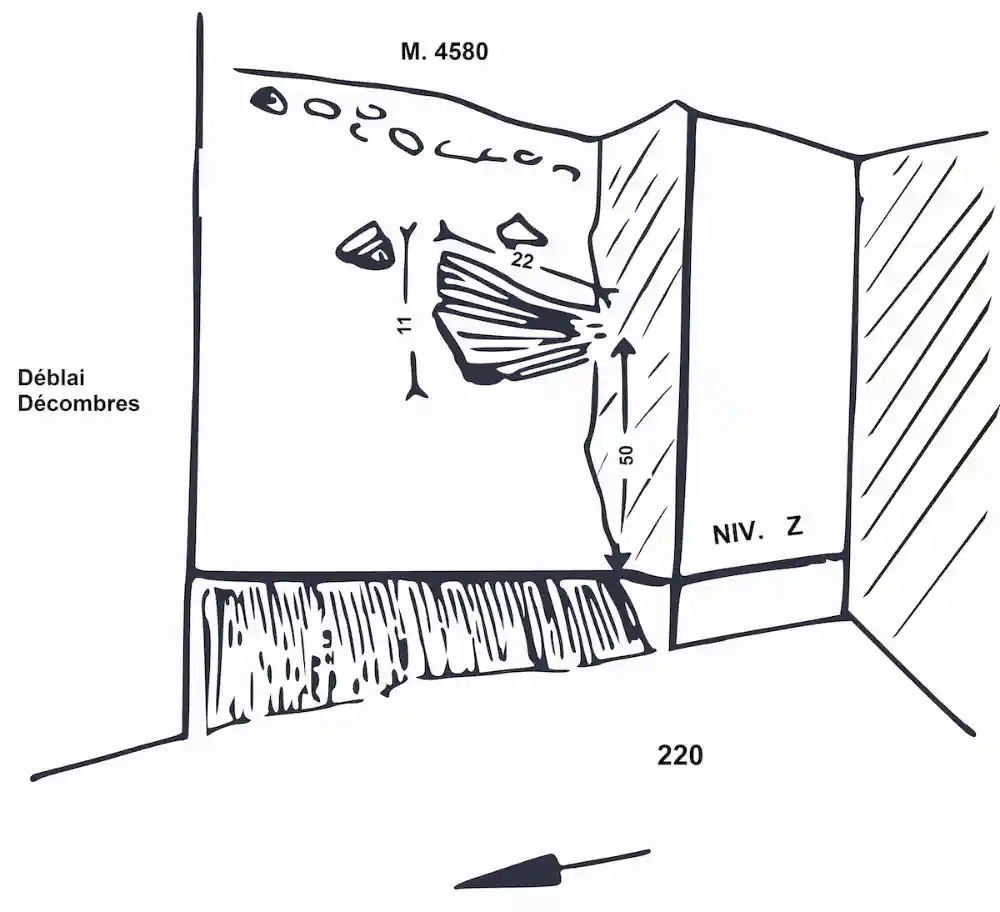
When, during a dig, tablets appear to be “flying” in a fill-in, or when fragments of a wall painting are found in various unexpected places, the archaeologist should stop for a moment and ask a simple question: where do these artifacts come from?
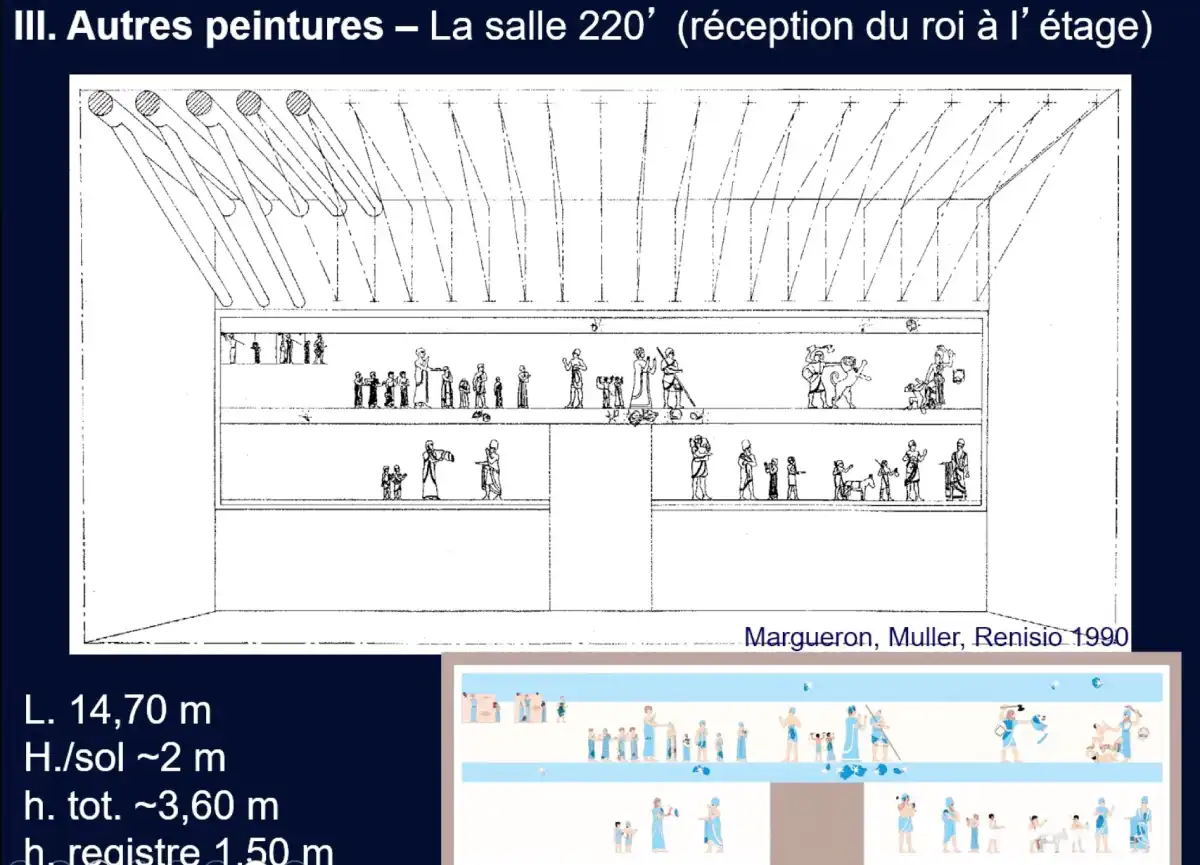
This type of anomaly is not a mistake – it is often a precious clue. It can reveal the existence of elements which have disappeared, made from perishable materials or destroyed a long time ago. Therefore, the presence of tablets in an unexpected place can reveal the former position of shelving or wooden bookcases. In the same way, fragments of a wall painting found in a fill-in can indicate a collapsed floor, with its walls, a door, or even the full layout of a room.
This is exactly what the example of Mari (Syria) shows, where the study of fragments of a painting made it possible to propose the reconstruction of a door and a reception hall for the king on the upper floor (room 220) [5].
Emptiness, an avenue still to be explored
Emptiness is a type of clue which remains under-used.
There are surely other “signatures” which we must learn to notice: micro-stratigraphy, disturbed sediments, signs of use, natural disruptions, past recoveries… as the example of the ancient Greek porticos at Thasos shows with recessed bays, which reveal materials that have disappeared [6].
In order to move forward, archaeology must cross-reference its own techniques from fieldwork (observation) and from laboratory work (experiments) as well as those from other disciplines (history, anthropology, the study of materials, etc.). It is often in these intersections of disciplines that emptiness becomes information.
Remember this for your notes: document absence as an archaeological fact (location, form, limits, fillings, stratigraphical relations). It might be that what you can no longer see is precisely the clue which explains the archaeological site.
Selective bibliography
Selective bibliography in English and French, from most recent to oldest:
- Chancerel A., « Du vide au plein : dynamiques à l’œuvre dans les structures en creux archéologiques », Revue archéologique de l’Ouest 41, 2025 [OnLine].
- Cauliez J., Costamagno S., Manen C., Milcent P.-Y., Nordez M., et al., Hiatus, lacunes et absences : identifier et interpréter les vides archéologiques, Actes du 29e Congrès préhistorique de France, 31 mai-4 juin 2021, Société préhistorique française, 2023.
- Mytum H. and Meek J., “Experimental Archaeology and Roundhouse Excavated Signatures: The Investigation of Two Reconstructed Iron Age Buildings at Castell Henllys, Wales“, Archaeological and Anthropological Sciences 12/78, 2020.
- Campbell, C. J., Giovine A., and Keating J., “Introduction: Confronting Emptiness in History“, In: Campbell, C. J., Giovine A., and Keating J. (ed.), Empty Spaces: Perspectives on Emptiness in Modern History: Perspectives on Emptiness in Modern History, University of London Press, 2019. [OnLine] https://doi.org/10.14296/919.9781909646520
- Caron-Laviolette E., Matomou-Adzo N., Millot-Richard C. et Ramé B. (éd.), Biais, hiatus et absences en archéologie, Éditions de la Sorbonne, 2019.
- Barbe N., « Une archéologie de l’absence. André Leroi-Gourhan et les prises de l’art, dans : Geel C. et Viguier A. (dir.), Arts et techniques I, ENSA Limoges/Naima Digital art publishing, 2017.
- Fayet S., « Documenter l’absence : les archives d’archéologues », Sciences de la société 89, Octobre 2013, p. 126-139.
- Mario Denti, « Pour une archéologie de l’absence. Observations sur l’approche intellectuelle et matérielle à la fouille de la céramique dans un contexte rituel », dans : Denti M. et Tuffreau-Libre M. (dir.), La céramique dans les contextes rituels. Fouiller et comprendre les gestes des Anciens, Actes de la table ronde de Rennes, 2010, Coll. Archéologie et culture, Presses universitaires de Rennes, 2013, p. 13-23. – download it on Academia.edu
- Bossard-Couronné M. et Brossin L., L’Antiquité à l’épreuve du disparu : de l’absence de vestiges dans les études archéologiques, Programme de la journée d’étude de mai 2010.
Notes
[1] Char R., Œuvres complètes, Paris, Gallimard, 1983, p. 351.
[2] Differential preservation refers to the uneven preservation of archaeological remains due to varying environmental conditions and human activities. This concept highlights how certain materials, deposits, or artifacts can degrade or remain intact depending on factors such as climate, soil composition, and cultural practices. Understanding differential preservation helps archaeologists to interpret archaeological remains more accurately and to account for biases related to their study.
[3] Margueron J.-C., Mari, métropole de l’Euphrate au IIIe et au début du IIe millénaire avant J-C., Éditions Recherche sur les civilisations – Picard, 2004.
[4] See more recently fig. 14 in Olive M., Pigeot N. et Bignon-Lau O., « Un campement magdalénien à Étiolles (Essonne): Des activités à la microsociologie d’un habitat », Gallia Préhistoire 59, 2019, p. 47‑108.
[5] See the lecture Le grand Palais royal de Mari et ses peintures murales from Béatrice Muller-Margueron on may 15, 2024 at the Bibliothèque nationale et universitaire on YouTube, as part of the exhibition Mari en Syrie and Muller B., Margueron J.-Cl. et Renisio M., « Les appartements royaux du premier étage dans le palais de Zimri-Lim », Coll. Mari : annales de recherches interdisciplinaires 6, 1990, p. 433‑52.
[6] Kozelj in « L’absence en question : les baies et les clôtures entre colonnes dans le portique grec », 3e Journée des Doctorants de la Fédération des Sciences Archéologiques de Bordeaux, 2015, p. 5.