contact@arkeotopia.org

Translation by N. Soufflet and N. Johnston
A renowned figure of archaeology passed away
Her work
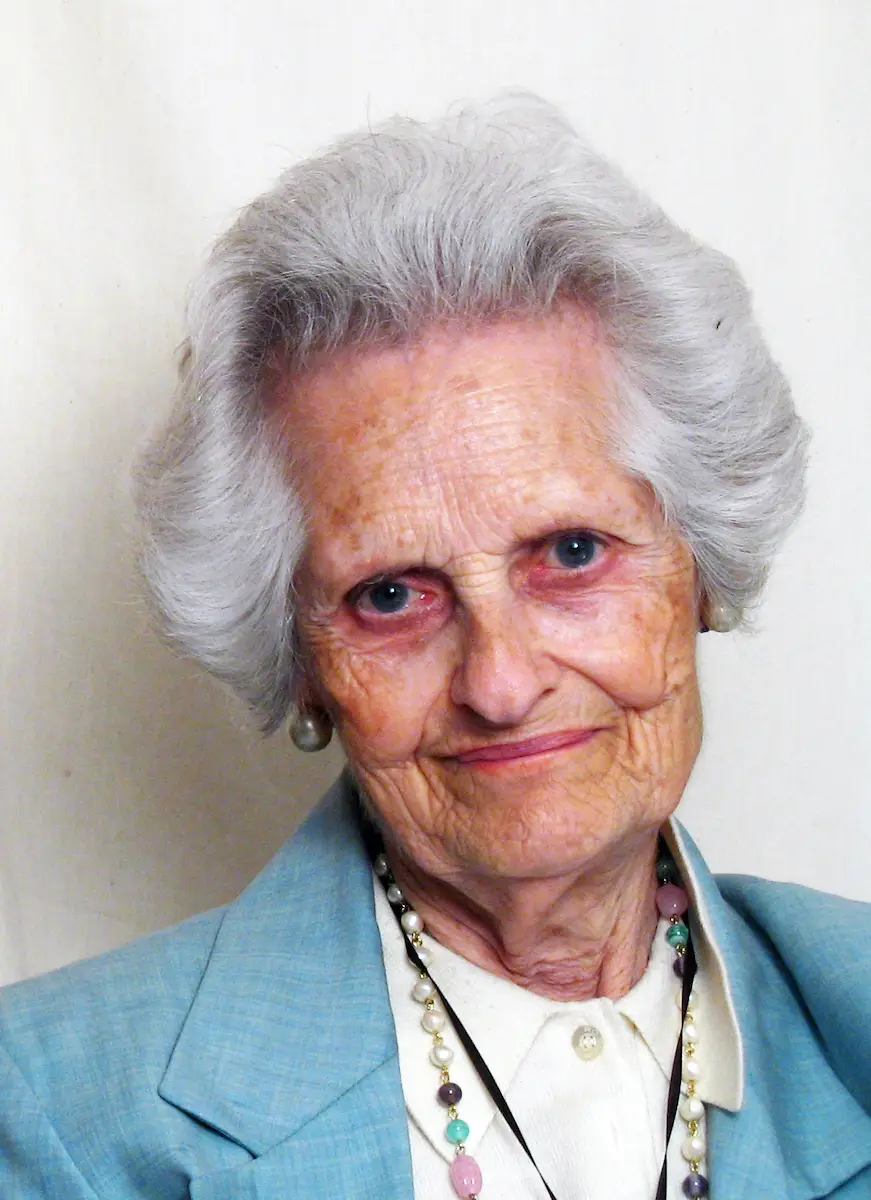
Born on September 1st 1921, Dr. Agnès Spycket studied in several institutions specialized in Eastern languages and art history which lead to her graduating from the École du Louvre, the 5th section (the religious science section) of the EPHE (École pratique des hautes études) and from the école libre des Langues orientales of the ICP (Catholic University of Paris).
After defending her first dissertation on feminine hairstyles in Mesopotamia (La coiffure féminine en Mésopotamie) on June 1st 1946 supervised by Georges Contenau and André Parrot, she defended her EPHE thesis on religious statues in Mesopotamia (La statue de culte en Mésopotamie) on June 18th 1946 in the 5th section although she wrote it in the 4th section — the philology and history science section.
As for teaching, she succeeded Maggie Rutten in 1959 as head of the Rachel Boyer Foundation’s public art history classes at the École du Louvre. She went on to pursue this teaching position until 1988. She also was Research Visiting Professor at Austin University (Texas) on Near-Eastern art from January to May 1978. Professor Gérard Nicolini from the social sciences department of Poitiers University personally asked her to teach a class on ancient Near-Eastern art history from 1984 to 1985.
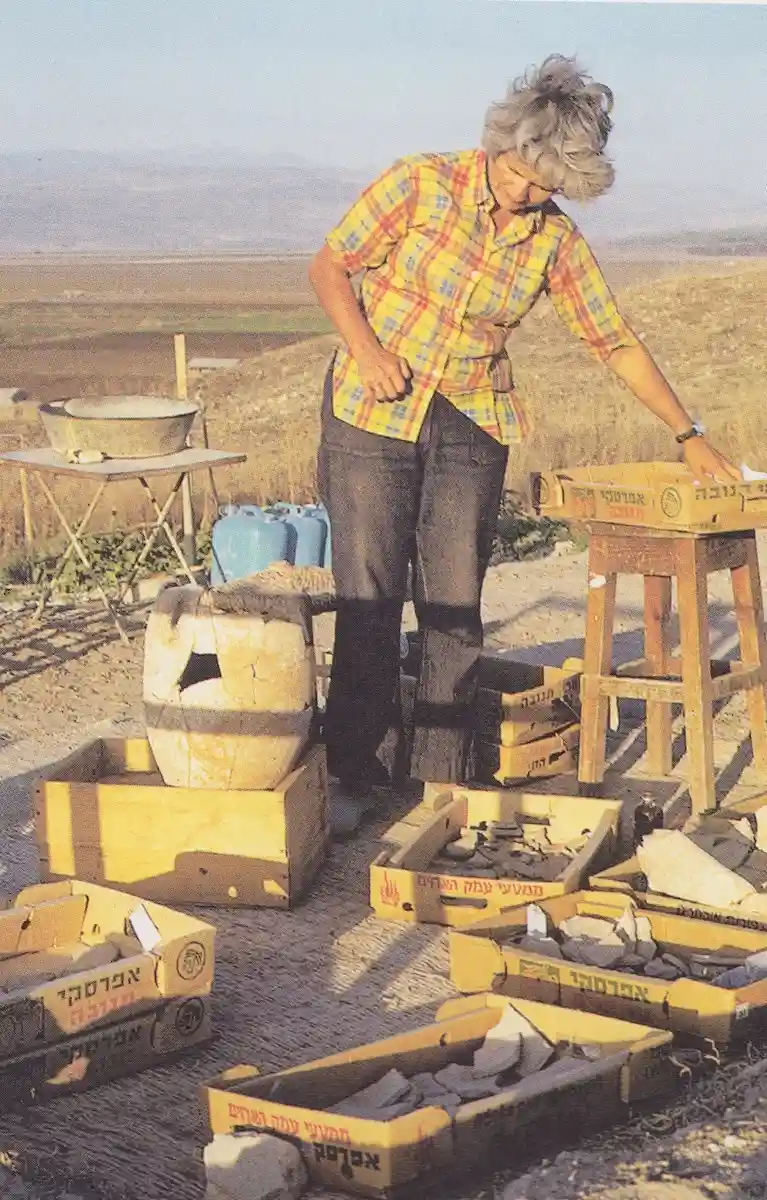
Besides the numerous obstacles she had to face throughout her scientific career as a woman, Dr. Spycket was honored by the Order of Arts and Letters at archaeologist André Parrot’s request on March 3rd 1973 for the “the long-awaited and well-deserved seal of approval for your tireless activity over the years in the service of science, this science: archaeology; in the service of museums: the Louvre” (Spycket, 2004, p. 191).
She passed away at 100 years old. Her departure marks the end of a renowned figure of archaeology and iconography.
Actions in her memory
- Parisians, help us preserve her memory at a national level thanks to the citizen’s initiative to ask for her to be a Knight of the Legion of Honor. Contact ArkeoTopia to provide us with your hand-written signature.
- Wikimedians, help us leave the mark she deserves on Wikipedia by making her entry better: Agnès Spycket.
- Readers of her work, take part in the #IReadArchaeo operation to pay her a last tribute on social media. Film yourselves reading one of her works out loud and use the hashtag #JeLisArchéo so we can share your post (to learn more about the operation, see: Ensemble, lisons à voix haute pour l’archéologie).
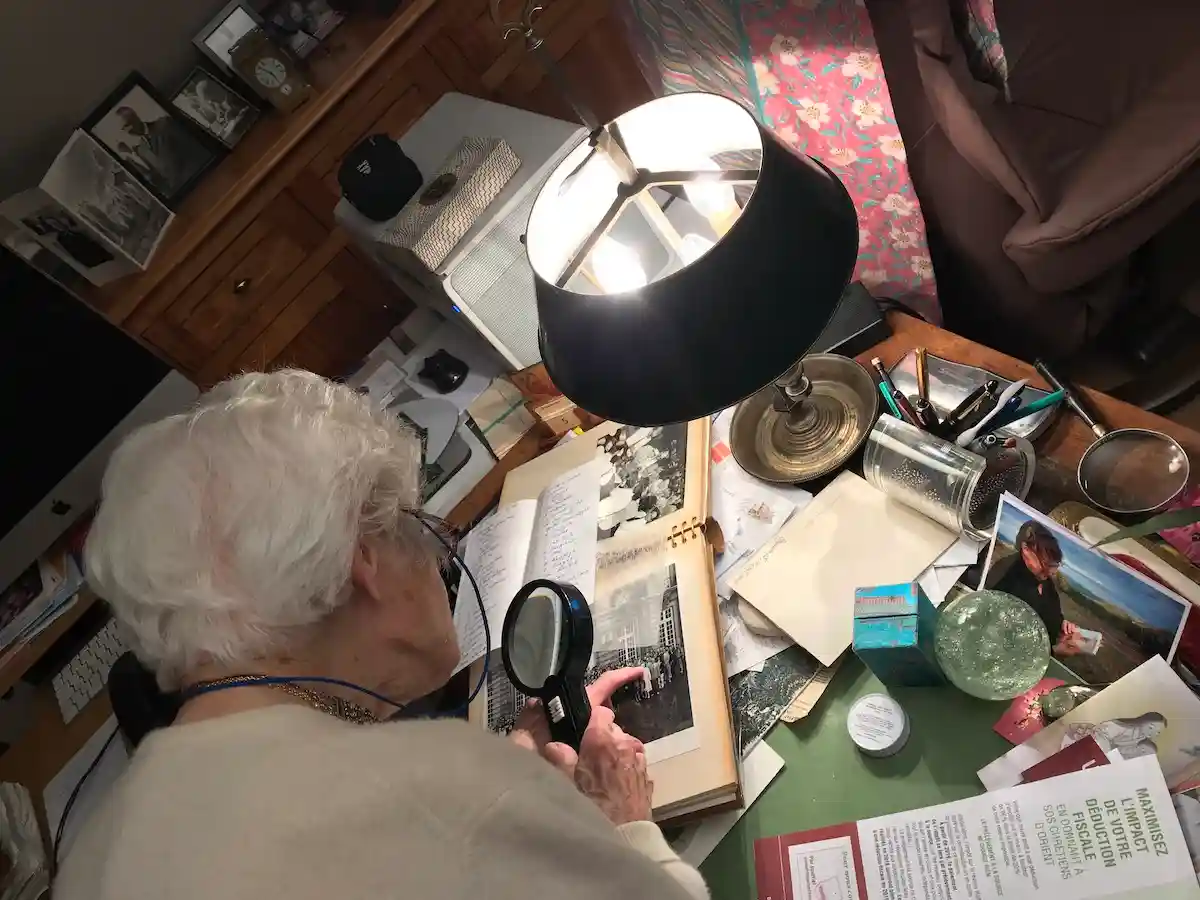
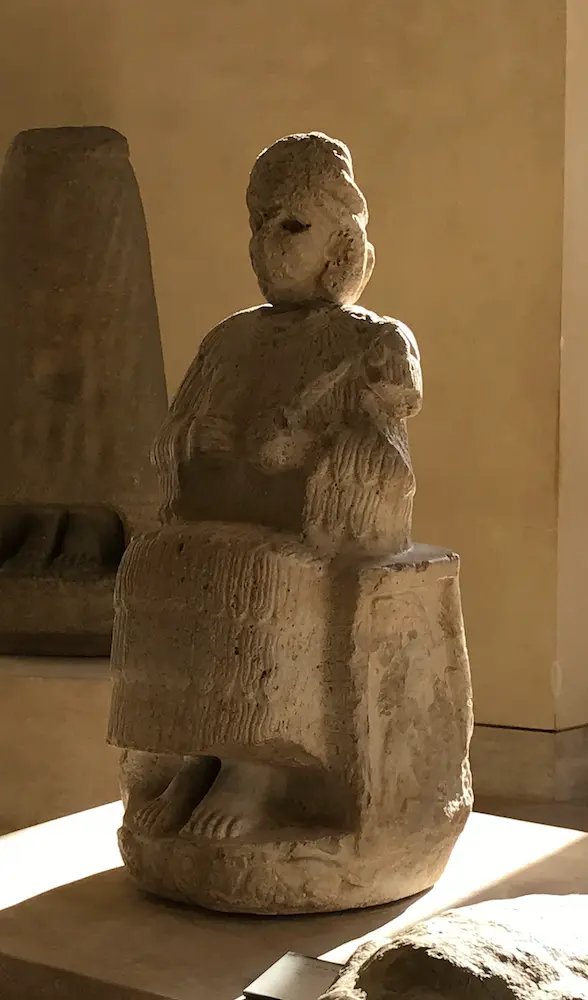
Her work
Her first work was published in 1945 under the title Illustration d’un texte hépatoscopique concernant Sargon d’Agadé in the Revue d’Assyriologie et d’archéologie orientale. She continued publishing her works until she had about a hundred articles and about fifty monographies including:
- Les Statues de culte dans les textes mésopotamiens : des origines à la Ire dynastie de Babylone, 1968
- La statuaire du Proche-Orient ancien, 1981 translated in 3 languages
- Eine frühdynastische Frauen-Statuette in der Prähistorischen Staatssammlung München, 1990 supervised by A. Spycket, K. Karstens, U. Kramm, H. Dannheimer und B. Hrouda
- Les figurines de Suse, 1992
- The human form divine : from the collections of Elie Borowski, 2000
- Madeleine Delbrêl connue et inconnue : livre du centenaire, 2004 supervised by G. François, A. Spycket et B. Pitaud
Hermann Gasche and Barthel Hrouda paid homage to her in 1966 with the volume entitled Collectanea orientalia : histoire, arts de l’espace et industrie de la terre, études offertes en hommage à Agnès Spycket published in 1996 in the collection Civilisations du Proche-Orient. Agnès herself paid homage to the scientific community she has worked with in her 2004 autobiography entitled À temps et à contretemps : un demi-siècle d’archéologie et de contacts dans le domaine du Proche-Orient published by the Recherches et Publications editions of Neuchâtel.
Do you want us to interview someone or publish a critique of a book, a documentary or an educational support related to archaeology destined to the general public, children or experts? Don’t hesitate to write to ArkéoTopia thanks to our form.
ArkeoTopia, an alternative approach to archaeology® wishes to look at today’s archaeology differently in order to better prepare tomorrow’s. To learn more about the association, watch our institutional video and our actions.