contact@arkeotopia.org

These days, the term “volunteer” is regularly overused and thrown about. Before reflecting on the pros and cons of voluntary contributions to science, we must agree on its definition. Contrary to popular belief, volunteers are typically qualified in a particular area, in this case, research. They carry out their work without compensation, outside of, or on top of, their profession. So, what does it mean to be a volunteer archaeologist?
How do volunteer archaeologists lend their skills to science?
|
Since archaeological research became a professional activity in the 1970s, volunteer archaeologists and their contributions have been living in the shadow of professionals. Along with amateur archaeologists, volunteer archaeologists must not be forgotten. They are, according to the iconologist and archaeologist Jean-Olivier Gransard-Desmond (2019, p. 167), “people educated with relevant training and/or degrees, who carry out their research without pay in addition to their main salaried occupation”. Their qualifications mean that they are equally capable of carrying out their research autonomously as well as in collaboration with professional archaeologists, in the field or in the laboratory. They may be independent of any research structure, as is the case for members of the National Coalition of Independent Scholars. They can also be part of private or public research structures, as is the case for several of the researchers mentioned in this article. This is why the term “volunteer” has been preferred to “independent”. In theory they should blend seamlessly into the scientific community, but is that really the case in practice? We explore the different profiles of volunteer archaeologists to shine a light on their role and feelings about their contributions. |
There is a place for volunteers in the field of archaeology and today, a number of professionals regret their disappearance. |
Passion: a volunteer’s driving force
 According to Stéphane Brière, “archaeological research is the kind of thing you feel in your bones. From a very young age, every pebble is an invitation on a voyage of discovery”. With these words, the foundation is laid, plain and simple. A graduate of the University of Mans with a degree in History, and a volunteer archaeologist, Stéphane trained in the field alongside professionals with the Pays Fertois Study and Research Society (Société du Pays Fertois Études et Recherches). Since January 1993, this association has been developing archaeological research east of the river Sarthe and bringing together professional and volunteer archaeologists.
First choice, rather than a back-up plan
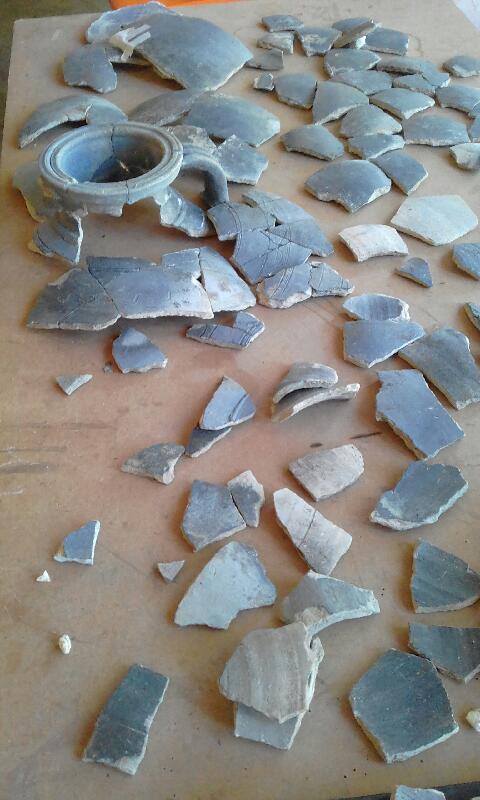 One misconception is the association of volunteering with failure. The simple fact that studies have not been transformed into a profession would explain the existence of volunteer archaeologists. “Many choose not to pursue a career in archaeology after their studies but continue to offer their expertise to research, collections, and publications,” explains Jérôme Primault, professional archaeologist with the Regional Directorate of Cultural Affairs (Direction Régionale des Affaires Culturelles – DRAC) of Nouvelle-Aquitaine.
Knowledge and contacts: two major contributions
 Long-since graduated and still active in the field, Romain Pigeaud has a doctorate in Prehistory, but dedicated his career to publishing, all while regularly publishing his research. “He publishes at least as much as someone getting paid to do it, and that’s how he shares his knowledge and his expertise with professional archaeologists” recounts his friend, Jérôme Primault. “Getting his opinion on this or that is invaluable.”
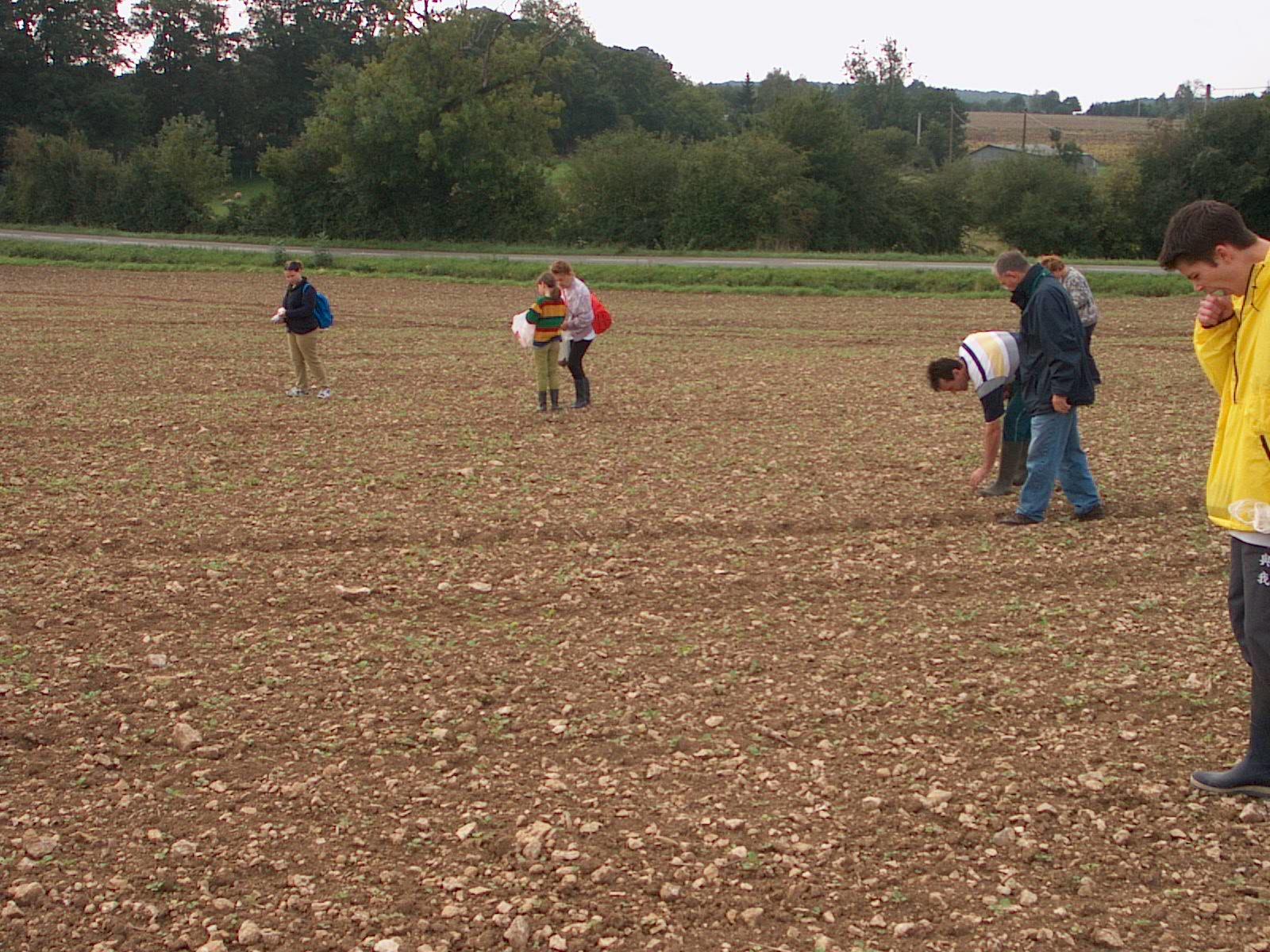 Furthermore, their relationships with local officials and landowners help support smooth interactions and the spread of new information. As a result, their role as intermediaries familiar with the region facilitates the scientific community’s research. “We’re there to help and they’re happy to have us,” underlines François-Xavier Ducellier, president and founder of the Pays Fertois Study and Research Society. Field-trained as part of his studies, François-Xavier Ducellier participated in salvage excavations in Poitiers and planned excavations at Masamas, the Gallo-Roman sanctuary in Saint-Léomar in the La Vienne region, in the 1980s. He holds a Master’s in Medieval History, and chose teaching for his professional career. A professor of History and Geography, he kept up his interest in archaeology by creating the Pays Fertois Study and Research Society (Société du Pays Fertois Etudes et Recherches), which began its work in the Huisne Valley in 1997.
Volunteer archaeologists are an essential support for the scientific community, both in the field and in writing. Their university education and/or field training and their enthusiasm are valuable not just because of their findings, but also because students and professionals can benefit from their expertise.
Activities supporting vigilance against looters and other damage
 Just like professional archaeologists, volunteer archaeologists play a front-line role in the fight against vandalism, a problem that is all too present in the field. One might think that volunteering could attract looters, but to be clear, the offenders are interested in the sites themselves above all else.
From lack of recognition to mourning falling numbers
 Since professional and volunteer archaeologists speak the same language and have the same educational background, they should have a good working relationship. “In certain heritage spaces, volunteer work is [even] essential to the continuity of public services,” underlines the Study relating to volunteer work and the participation of civil society in Heritage Policy, 2022, (Étude relative au bénévolat et à la participation de la société civile aux politiques des patrimoines) on page 65, presenting municipal libraries as an example.
The volunteer scientist: a profile worthy of further study
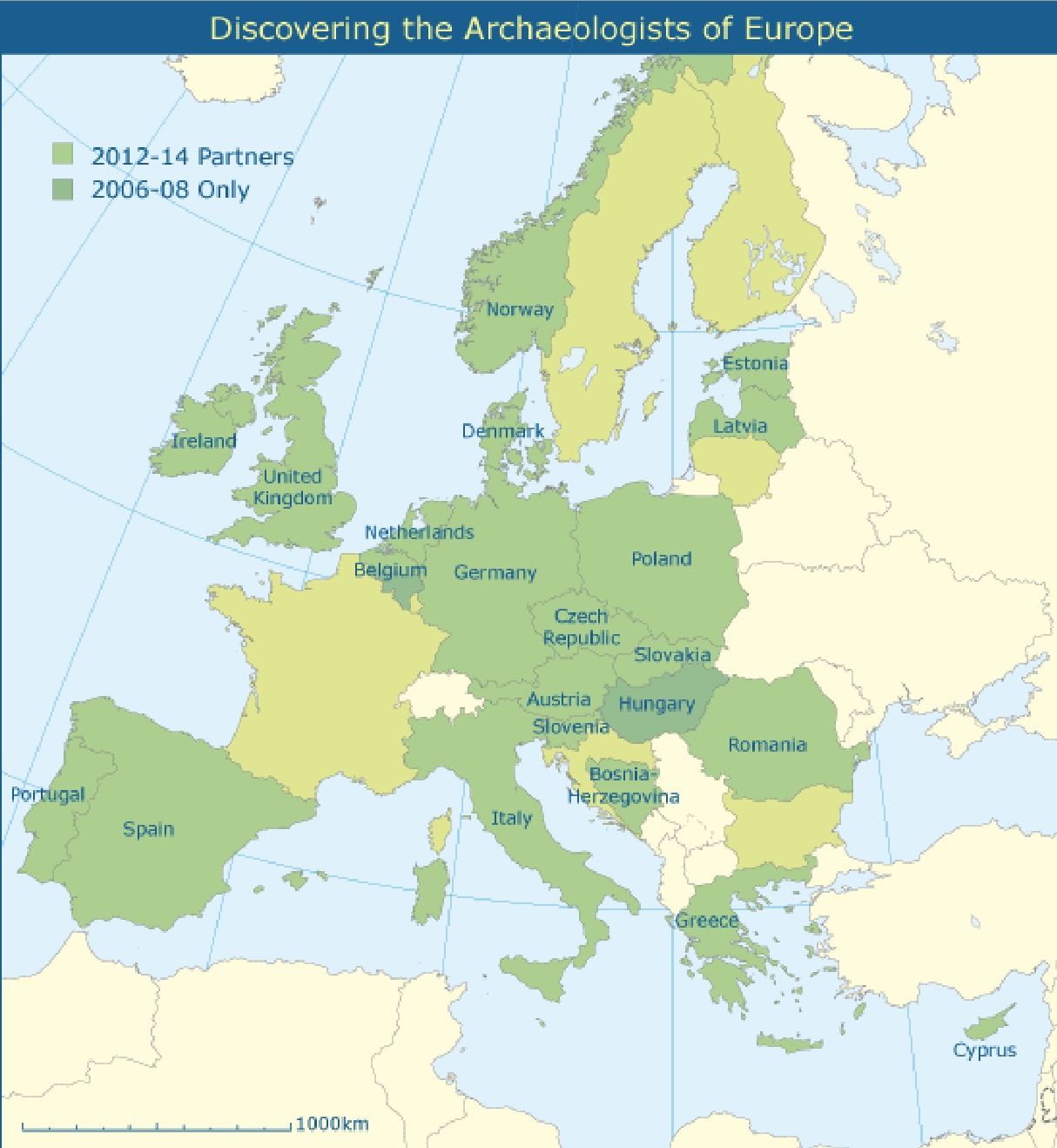 As seen through the numerous accounts here, volunteer archaeologists are essential to archaeological research, simultaneously passionate, skilled, and protective of heritage sites. Be that as it may, there are no studies focusing on this group, despite existing studies on professional salvage archaeologists with the Discovering Archaeologists in Europe program and even on amateur archaeologists with the development of the citizen science and open science movements. This subject should be of interest to bodies such as the Institute for Research and Innovation at the Pompidou Center and the Particip-Arc network.
Sources
Interviews with (in alphabetical order):
- Alain Bénard: retired from the banking sector; Doctor in Prehistory from the University of Paris 1 Panthéon-Sorbonne; researcher at the Archéologies et science de l’Antiquité laboratory (UMR 7041 of the CNRS); president of the Study, Research, and Protection of Cave Art Group (Groupe d’études, de recherches et de sauvegarde de l’art rupestre – Gersar).
- Jean-Claude Bessac: trained as a master stone cutter; Master’s in Archaeology from the École des Hautes Études en Sciences Sociales in Paris; Doctorate from the University of Rennes II ; research engineer at the CNRS and recipient of their bronze medal in 1988; authorized to lead research since 2004. Read more about his career on the ArScAn website.
- Stéphane Brière: Bachelor’s in History from the University of Mans; field-trained alongside professionals with the Pays Fertois Study and Research Society (SPFER).
- Christophe Coquil: hardware technician; Master’s in History and Archaeology from the University of Brest.
- Jean-David Desforges: operations manager in the interdepartmental archaeology service (departments 78-92); president of the Society for the Prevention of Archaeological and Historical Heritage Looting (HAPPAH).
- François-Xavier Ducellier: retired from second level teaching; Master’s in Medieval History; founder and president of the Pays Fertois Study and Research Society (SPFER).
- Jean-Olivier Gransard-Desmond: iconologist and archaeologist at ArkeoTopia; associate researcher at the Archaeology and Archaeometry laboratory (UMR 5138 of the CNRS).
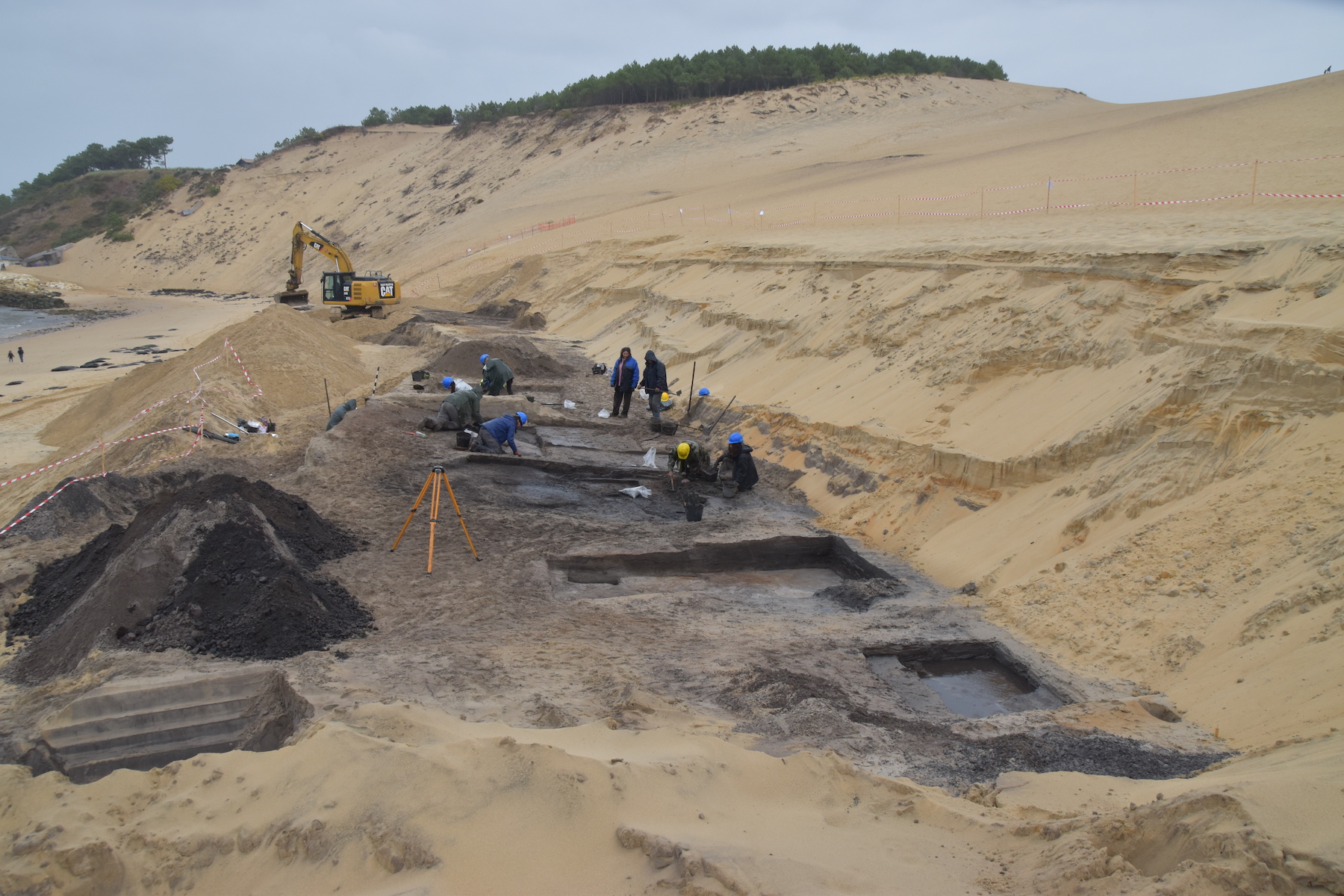
- Philippe Jacques: professor of Engineering Sciences; field-trained in archaeology, and director of the archaeological excavations of the Dune of Pilat.
- Jérôme Primault: Heritage Curator at the Regional Directorate of Cultural Affairs of Nouvelle-Aquitaine (DRAC) – Poitiers site (Ministry of Culture)
- Daniel Vidal: retired from the French National Railway Company in July 2017; Bachelor’s in Archaeology; as of 2022 applying for a Master’s at the University of Bordeaux III as part of the Estran project run by the UMR 5607 of CNRS.
- Didier Vignaud: construction consultant; Bachelor’s in Archaeology Techniques in Europe from the French National Center for Distance Learning (Centre national d’enseignement à distance); Master’s in Social and Human Sciences with a focus on preventative and planned archaeology at the University of Paris 1 Panthéon-Sorbonne, and in 2018 at the University of Paris-Sorbonne; as of 2022 PhD student in second year at the University of Pau.
 Bibliography
- Demoule J.-P. , Landes C. et Jacob J.-P. (dir.), La fabrique de l’archéologie en France, Paris, Éd. La Découverte, 2009, p. 54-66.
- Demoule J.-P., Guide des méthodes de l’archéologie, Paris, Éd. La Découverte, 2005, p. 268.
- Fédération des archéologues bénévoles et amateurs de France, Livre blanc sur l’archéologie et la nation, Décision de l’Assemblée Générale du 13 février 1988, 1988, Agde.
- Gransard-Desmond J.-O. « Professionnels, bénévoles, amateurs et citoyens : des acteurs de la recherche pour quels apports ? ». Revue canadienne de bioéthique / Canadian Journal of Bioethics 2/3, 2019, p. 166‑193.
- Gransard-Desmond J.-O. “Can we really distinguish between treasure hunters and volunteer archaeologists?”. Internet Archaeology 33. http://dx.doi.org/10.11141/ia.33.2
- Gransard-Desmond J.-O. et Houdin J.-P. “Professionals, volunteers and hobbyists in archaeology”. Paper recording of the conference Archéo-éthique from the 26 of May 2018 at Paris, July, 1, 2018.
- Le Clech S., Saunier B., Penicaud P. et Piechaud S., Étude relative au bénévolat et à la participation de la société civile aux politiques des patrimoines, Ministère de la Culture – Direction générale des patrimoines et de l’architecture, mai 2022.
- Mouillebouche H., « Les bénévoles dans l’archéologie française. Réintroduction d’une espèce disparue ? », Archéothéma Hors-Série 5, 2012, p. 14‑15.
Further reading
- See the participatory science programs listed by the French National Research Agency (Agence nationale de la recherche) Collabora program and its list of cultural participatory platforms with a collection of around one hundred projects.
- Access the Particip-Arc network, supported by the Ministry of Culture, a network of contributors to cultural participatory research and its project directory.
- The website of the Center for Archaeological Research on Les Landes.
- Read Didier Vignaud’s scientific publications on his Academia profile.
- See Philippe Jacque’s reports in La revue Archéologie de la France – Informations (the French Archaeology Review – News) and in particular the notice of the 2018 planned excavations “La Teste-de-Buch – Dune du Pilat,” [archaeological notice], French Archaeology Review – News [on line], Nouvelle-Aquitaine, published online September 14, 2021.
- Wikipedia entry on Romain Pigeaud.
- De la Michellerie, E.: “Why is archaeology not restricted to experts in the field?, April 1, 2022, [on line] https://aktpdev.arkeotopia.org/en/activities/lobbying/549-amateur-scientists-the-unsung-heroes-of-archaeology.html
. French Standardization Association (Association française de normalisation – Afnor): “Management des activités de recherche”. Standard. National standards and national normative documents. Afnor, July 2014. https://www.boutique.afnor.org/en-gb/standard/nf-x50553/management-of-research-activities/fa180471/43470.
ArkeoTopia, an alternative approach to archaeology® aim is to give another perspective to archaeology today non-in order to better help existing bodies prepare that of tomorrow. To know more about the association, watch our institutional video and our actions. Any question contact us thanks to our form.