Book Review – The Great War explained to children

Par Jean-Olivier Gransard-Desmond | 06 Oct. 2018 | The Word of future archaeologists
Translation by Noah Johnston

For their first book in the Story Doc collection, Fleurus Publishing invites you to explore the lives of soldiers in the First World War. Historical facts, illustrated maps, lexicon, timelines, and information on the technical aspects of the war await you. This is all presented with a simple, clear, dynamic text in French by David Dumaine and showcased with beautiful illustrations, full of humour, by Nicolas Haverland.

SOLDATS DANS LA GRANDE GUERRE
(SOLDIERS IN THE GREAT WAR)

A fully illustrated documentary, halfway between sketchbook and comic strip, to tell the story of the ‘Poilus’ (French nickname for the soldiers of WWI, literally ‘the hairy people’) and relive the hell of being in the trenches in an intelligent way adapted for children. From the pen of David Dumaine, a history and geography teacher, and the brush of illustrator Nicolas Haverland, children ages 9 and up will step into the daily life of the French soldiers in the First World War. From the trenches to the battlefields, this ‘Poilu’, molded by hardship, violence, mud and cold, has become a true national hero. A symbol of suffering and death, he also embodies life and hope.

This documentary book explores the history of the Great War by starting from its historical context with the end of the Belle Époque until demobilization while conveying each stage of the life of a soldier from different army corps. In a comic book style, where color plays a key role, illustrations and texts come together to show young readers the historical conditions of the war, the difficulties of the front line such as mass evacuations and life in the city, developments in military weaponry, particularly in the fields of aviation and gas weapons, and the use of widely diverse skills (painters, engineers, etc.). A wealth of information!
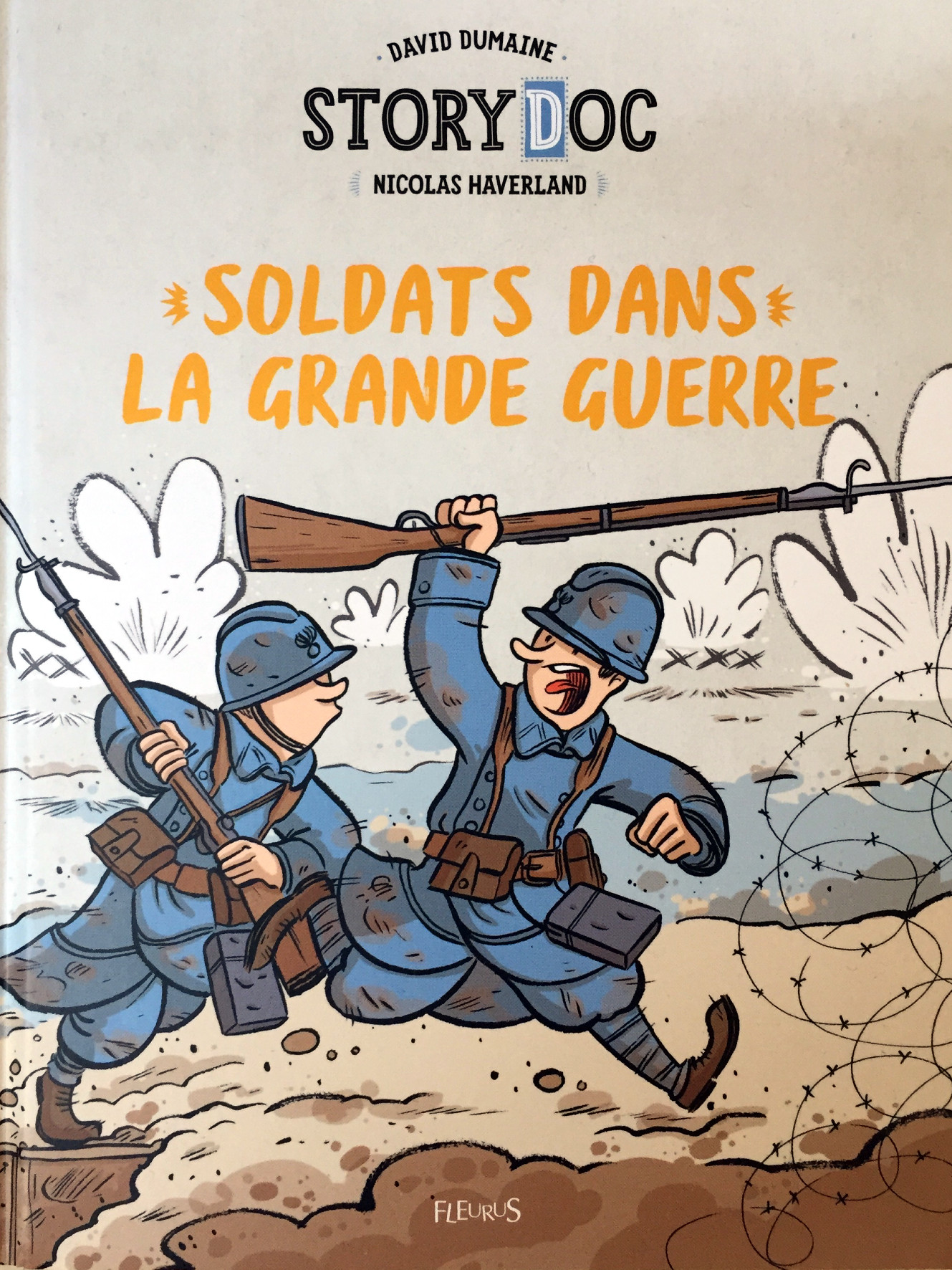
Cover of Soldiers in the Great War invites you to explore the lives of soldiers in the First World War © Fleurus publishing
David Dumaine and Nicolas Haverland, Soldats dans la Grande Guerre (Soldiers in the Great War), Coll. Story doc 1, ed. Fleurus, 2018.

80 pages. Format 17 x 21 cm. Public price including VAT: € 11.95 to be found at your bookstore or on the publisher’s website

ArkéoTopia’s opinion

Contents/Scenario 5/5

Full trowelFull trowelFull trowelFull trowelFull trowel

A logical progression to understand the timeline of events such as the different operational needs of the warring parties with text and illustrations adapted to the reader’s age. The historical context given by David Dumaine is worth noting. Rather than following, as usual, the death of the archduke, heir to the Austro-Hungarian Empire in Sarajevo, David Dumaine draws attention to the real conditions at the end of the Belle Époque which are less well known to the general public.

Illustrations 5/5

Full trowelFull trowelFull trowelFull trowelFull trowel
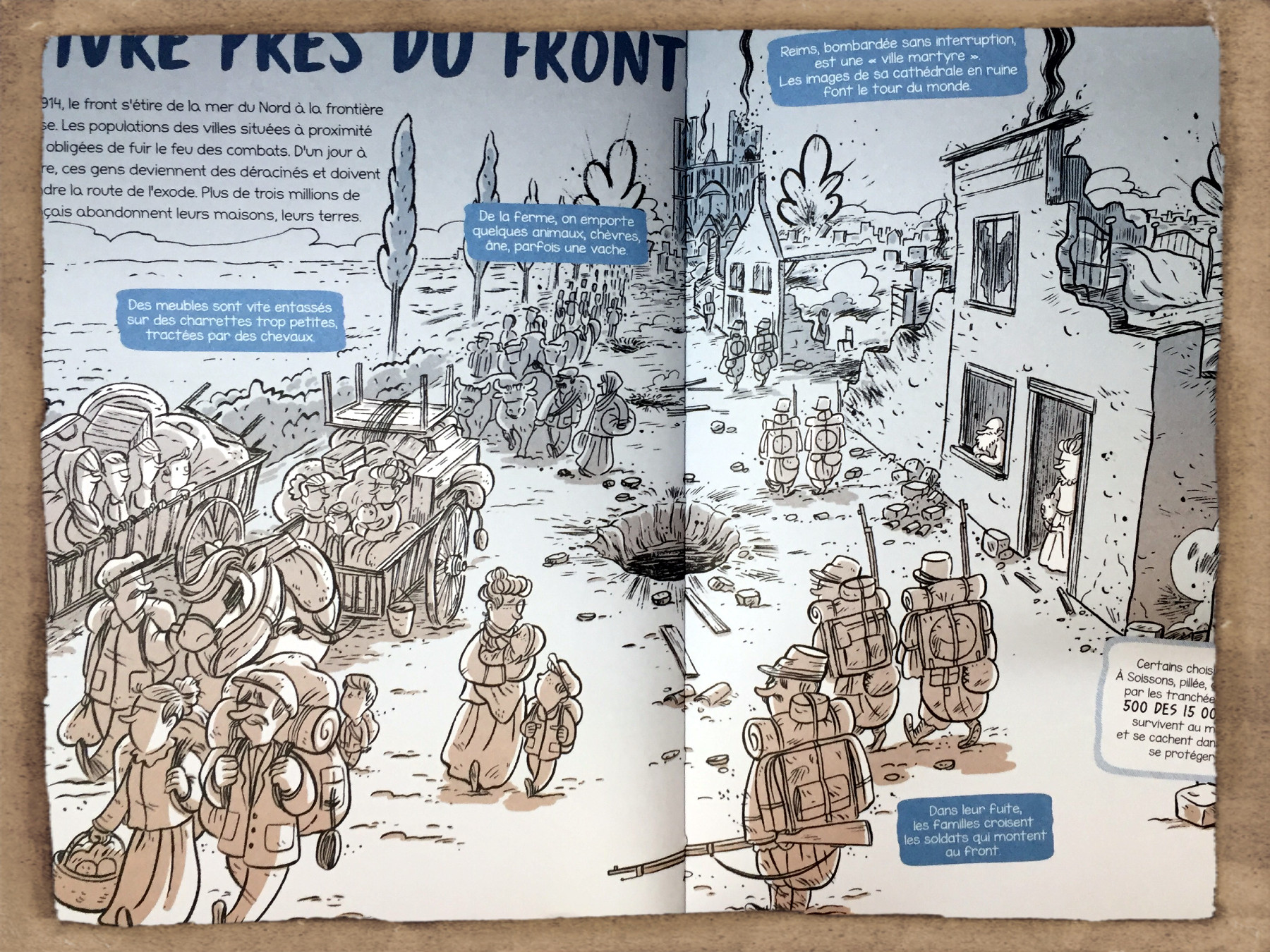
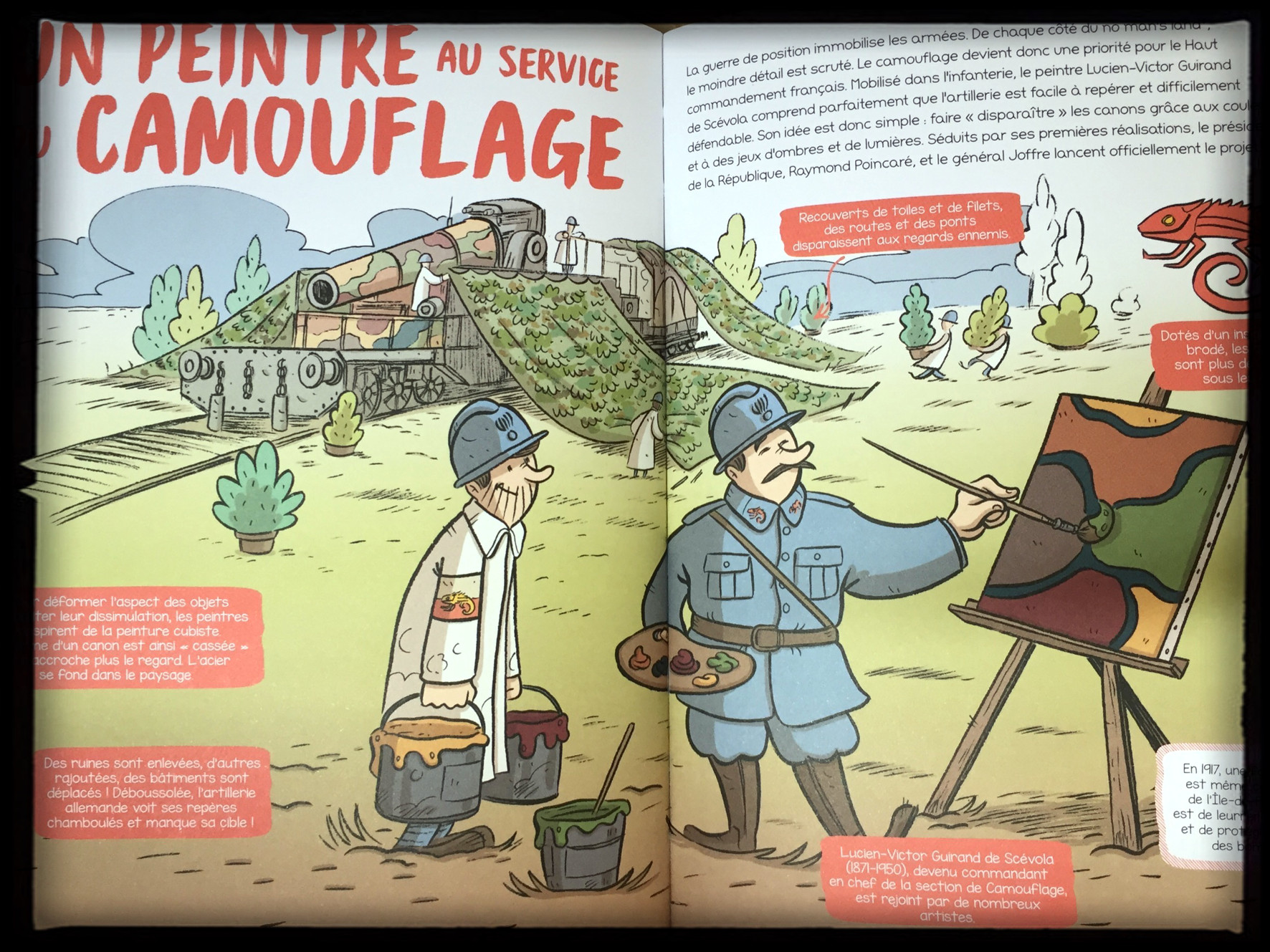
Beautiful two-page illustrations in color, that are both dynamic and relevant to the subject. We really appreciated the treatment of the colors which, like the text, convey the technology, the historical facts, the horror, the fear, and the hopes of the ‘Poilus’. Conveying both the atmosphere and the variety of documentary styles (geographic and geopolitical maps, specific illustrations to present events, technical illustrations to help people understand), Nicolas Haverland also did not hesitate to use duotone and transform the colors of dread into colors of movement, to aid comprehension for the young reader. The variety of font and font sizes also helps make reading clear, enjoyable, and eye-catching.
Beautiful two-page illustrations in color, that are both dynamic and relevant to the subject © Fleurus publishing

Resources 3/5

Full trowelFull trowelFull trowelTruelle videTruelle vide
We appreciated having a lexicon of the trenches. By allowing the writer to not be restricted regarding the vocabulary, it thus helps enrich children’s vocabulary. The use of this lexicon is facilitated by the recurrent use of asterisks allowing the child to start reading where they want. It is unfortunate that an explanation on the use of asterisks was not provided. Not all 9 to 11 year olds know what this strange star means. The presence of a timeline and maps helps in understanding the events.
On the other hand, it is a pity that the pages are not numbered, which makes handling the book difficult. The lack of a bibliography or at least a sitography is more troublesome. It would have been interesting to allow readers to continue to investigate the subject with other more complex works or documents with photographs. This oversight is a pity, especially as the subject is covered by a large number of websites.
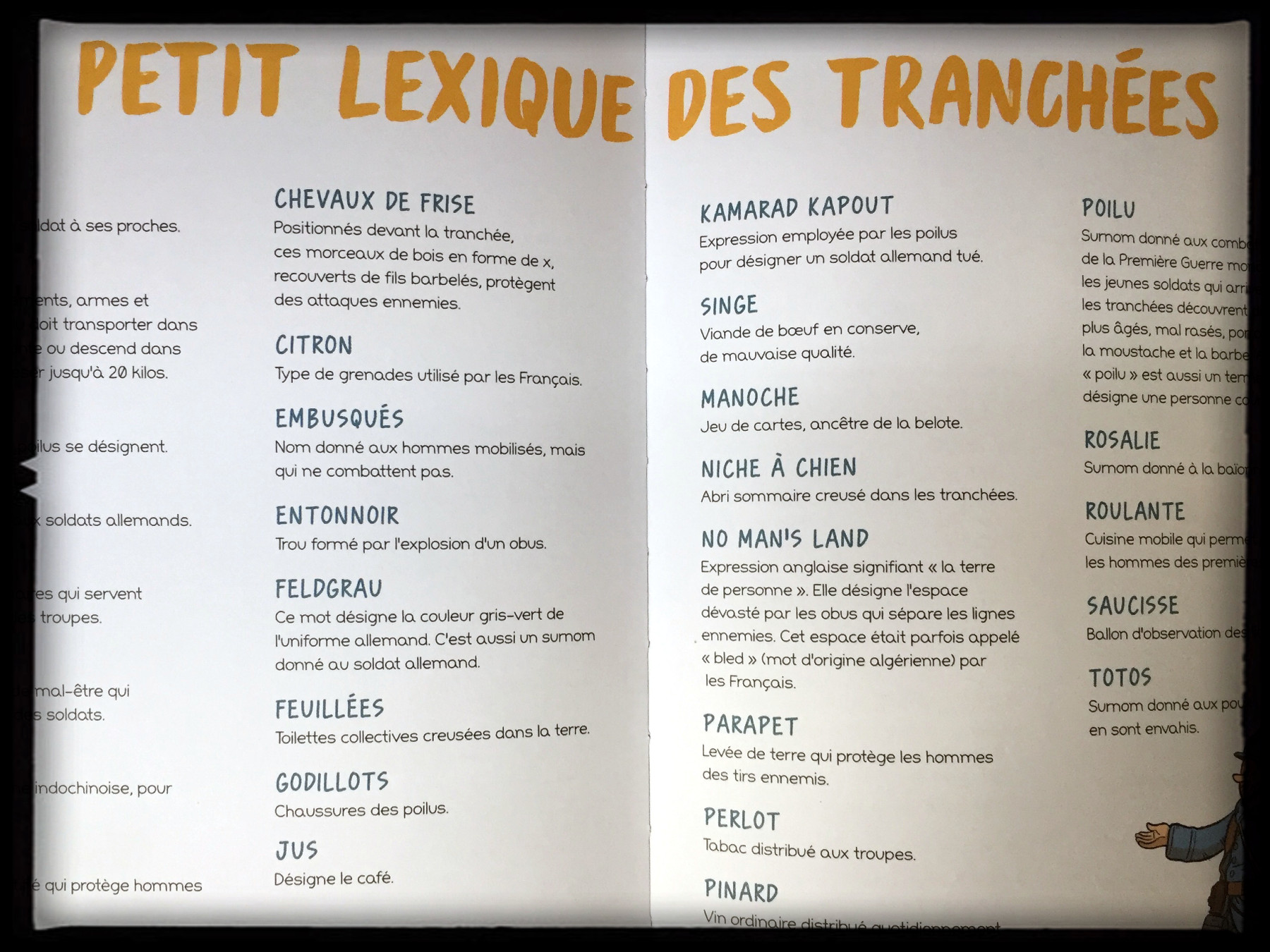
A lexicon of the trenches, but lack of a bibliography and pages are not numbered © Fleurus publishing

Relevance to archaeology 5/5

Full trowelFull trowelFull trowelFull trowelFull trowel
At last a children’s book which presents the archaeological dimensions of the Great War! Some examples include: the identification of warring parties, including colonial troops, by their style of clothing; the evolution of uniforms with the change from the kepi to the famous Adrian helmet and the comparison between the German and French uniforms with the advantages of the former and disadvantages of the latter; the presentation of the different army corps and not only the ‘Poilus’, showing the engineers, the painters of camouflage, etc.

In fact, it would have been good if the foreword highlighted the work of archaeologists, and not only that of historians.
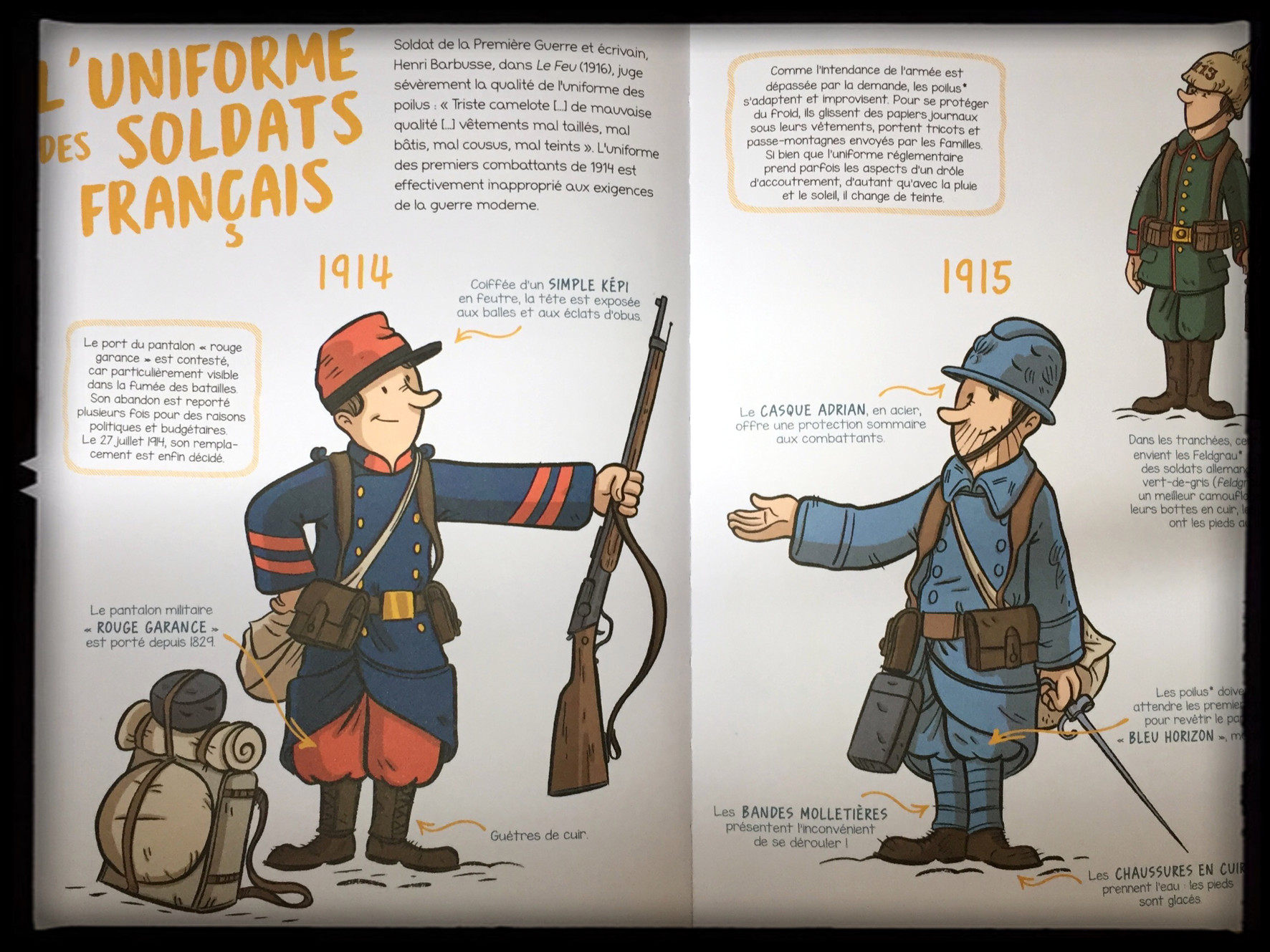
The evolution of uniforms with the change from the kepi to the famous Adrian helmet © Fleurus Publishing
Comparison between the German and French uniforms with the advantages of the former and disadvantages of the latter © Fleurus Publishing

Adaptation to target audience 5/5

Full trowelFull trowelFull trowelFull trowelFull trowel
Fleurus editions had the clever idea to call on a writer able to present the subject in an intelligent and playful way in association with an illustrator who knew how to make the subject come to life, we loved it !!! In addition to its documentary aspect, it is a beautiful object, pleasant to hold, to read and to reread. Perfectly suited for 9-year-olds and even adults who would be turned off by long, complex books.

Overall appreciation 4.5/5

Full trowelFull trowelFull trowelFull trowelDemi truelle
David Dumaine and Nicolas Haverland have signed off on a documentary book that is pleasant to read, innovative, and enriching on a difficult subject. A beautiful book, essential for a presentation in elementary or middle school on the First World War, as much for the content as for the form (illustrations that can be hand copied for a presentation). However, it would need to be associated with one or more books providing first-hand sources (photographs, posters, letters, etc.).

The goal of striking a balance between sketchbook and comic strip is so successful that there is a high risk that the documentary aspect could disappear. This is why it would have been useful to add a quiz or a visual game, or both, at the end of the book. This absence is all the more regrettable as the texts and illustrations lend themselves perfectly to this. One area for improvement in a future edition, which would then be perfect, would be to ensure that the knowledge acquired is better consolidated and that the important points can be highlighted.

Now it’s your turn to tell us what you think about it on ArkeoTopias Facebook page or by writing to him at Augustin.

To find out more about the authors: author David Dumaine and illustrator Nicolas Haverland

If you would like us to review a book, documentary or other support related to archaeology, whether for children or adults, do not hesitate to contact us via our form.

ArkeoTopia, an alternative way to archaeology aims to take another look at today’s archaeology to better help existing organizations prepare for tomorrow’s.

To find out more about the association, please check out our institutional video and our actions.